Industries
Design for logistics and supply chain software
Booking a container, documenting damage in a yard, sourcing a part from another continent. The flows are long, the users are busy, and the tolerance for a confusing screen is zero.
 2020 Red Dot Design Award
 MIT Design Lab
Why logistics software is harder to design than it looks
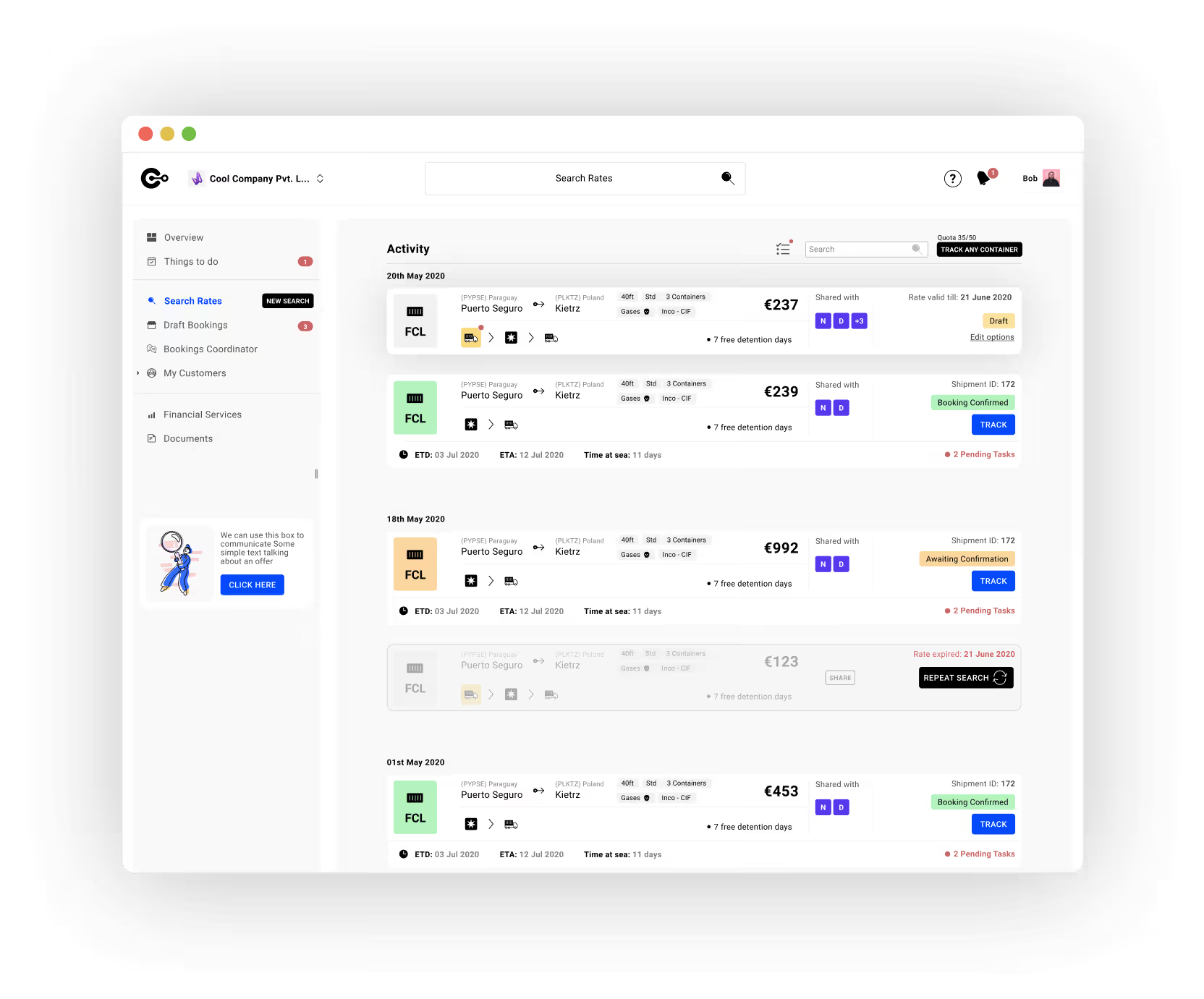
Shipping is not one transaction. It is a chain of dependent decisions with different parties, documents and failure points at every step. Cogoport's marketplace covers full container, less than container and air freight, door to door, and each of those carries its own exceptions. A designer whose experience is checkout flows will flatten that and break it.
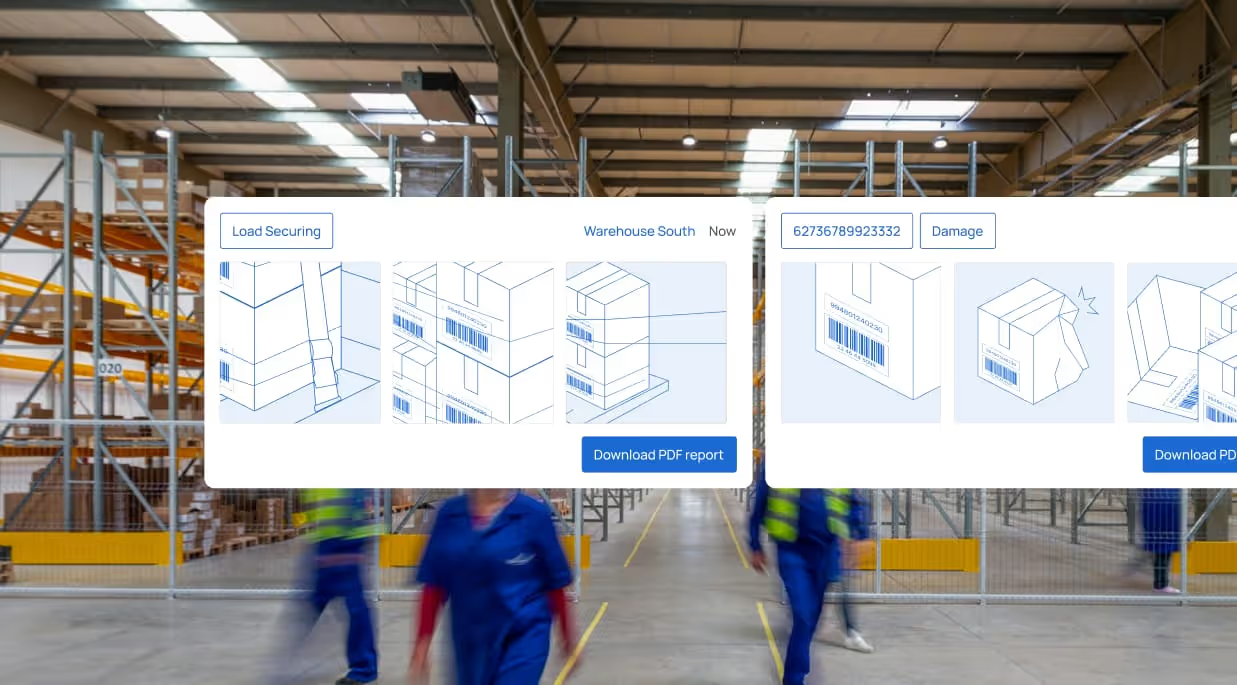
Then there is the user. Freight coordinators, warehouse crews and field teams are measured on throughput, and they will not read your onboarding. Blimp's mobile setup had to work for someone documenting damage in a yard, not for a buyer evaluating software at a desk.
The third thing is that most of this category competes on price because buyers cannot tell the products apart. That is usually a positioning problem wearing a pricing costume.
What usually brings people to us
Five, and the first two show up almost every time.
The booking flow has more exceptions than happy paths
Every mode, route and customer type adds a branch. The interface ends up as a form with forty fields and a support team explaining it by phone.
Adoption stops at the warehouse door
Head office bought it. The people on the floor did not. We rebuilt Blimp's mobile onboarding so a warehouse team could get set up without a technical call.
Aggregators take the search traffic
Freight and sourcing queries are crowded with directories. Cogoport went from 8,000 organic visitors a month to 24,000 within a year of rebuilding brand, website, product and sales focus. Sourcing Allies went from invisible in Google to the top result for sourcing in China.
Every competitor sounds identical
Reliable, global, end to end. When four websites make the same claim, the buyer falls back on price. Positioning is the cheapest available fix and almost nobody does it first.
You are going global on a site built for one market
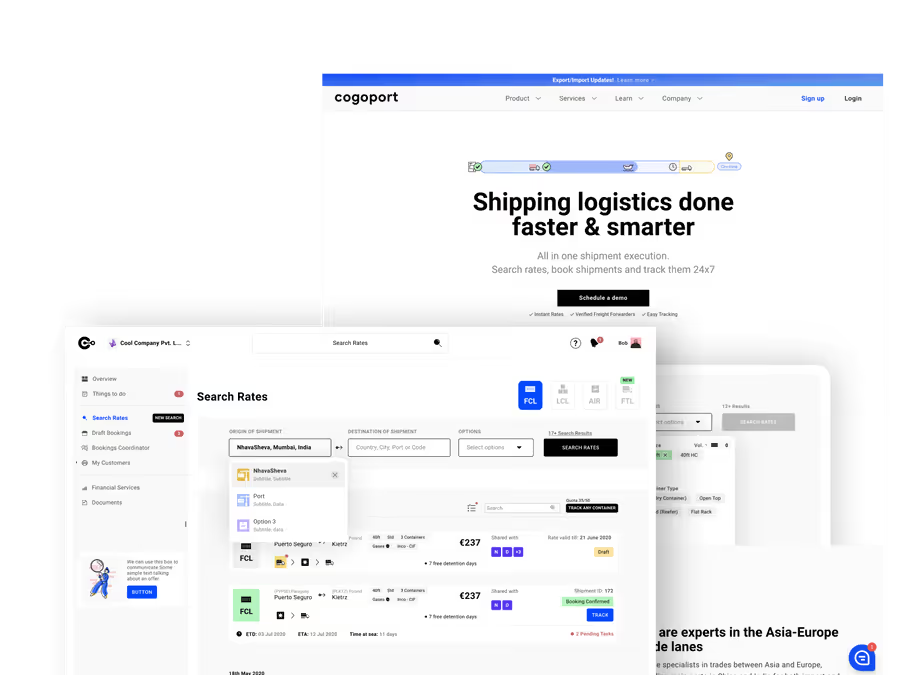
Cogoport rebuilt brand, website, digital product, organisation and sales focus as preparation for going global. A structure that works in one market rarely survives the second one untouched.
Where we help
Four things. Cogoport took all four at once, which is the unusual case rather than the rule.
Product design for long, conditional flows
Booking, quoting, documentation and tracking, structured so each exception appears where it is needed instead of on every screen at once.
Mobile interfaces for the field
Photo documentation, reporting and setup flows for warehouse and field teams working fast, outdoors, with no time for a tutorial.
Positioning, brand and website
The message first, then the site built to carry it. For Cogoport this ran alongside the product work and a change in sales focus.
SEO and content that survives the aggregators
Search intent mapped to real buying moments, then a content architecture built to hold the position once it is won.
How a project runs
Five phases. The first one is about your customer process, not your product.
- Phase 1
Understand the chain
We map the parties, the documents and the decisions in your customer's actual shipping or sourcing process before we look at your interface.
- Phase 2
Workshops
Sales, operations and product in one room. The exceptions that break your interface are usually already known by someone in support.
- Phase 3
Positioning and structure
What you are, who for, and why you rather than the aggregator. Then the site architecture and product structure that carry it.
- Phase 4
Design and build
Interface design, brand, copy and front end, produced with your engineering team rather than thrown over to it.
- Phase 5
Search, content and sales material
The part that compounds. Cogoport's organic growth arrived in the year after the rebuild, not on launch day.
How we work with your team
Logistics products have two sets of users who never meet each other. We work with both.
We watch the floor, not only the boardroom
Where access allows, we watch warehouse and field users work rather than hear them described in a meeting.
Strategy early, then execution
Direction is settled in the first weeks so the build is not renegotiated every sprint.
One team across brand, product and search
Positioning, interface and search architecture get decided together. Separating them is how a site ends up saying one thing and ranking for another.
You keep the system
Components, documentation and content structure, handed over so your team can extend it without us.
Work in logistics and supply chain
Three projects: a freight marketplace, a field documentation product, and a sourcing business.

Cogoport
A global marketplace where importers and exporters book full container, less than container and air freight door to door. We rebuilt brand, website, digital product, organisation and sales focus ahead of the company going global. Organic traffic went from 8,000 visitors a month to 24,000 in a year.Read the case study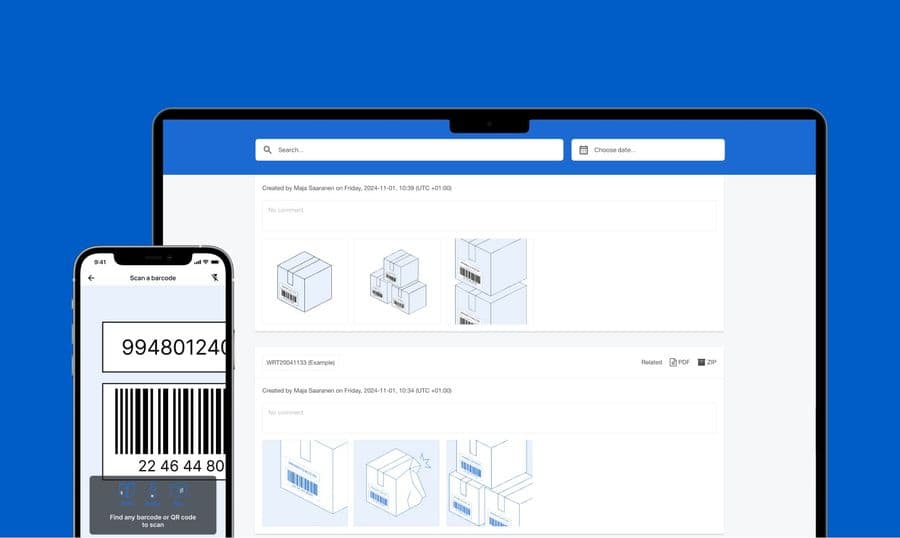

Blimp app
Enterprise photo documentation and reporting for logistics and manufacturing. Rebrand and website, plus a mobile onboarding flow rebuilt for warehouse and field teams.Read the case study
Sourcing Allies
Over a million objects sourced and manufactured in China for customers across the US and Europe. We overhauled the website, sales material and sales process, and the company went from invisible in Google to the top result for sourcing in China.Read the case study
Related pages
FAQ about logistics software design

What kind of logistics products do you design?
Freight booking and quoting platforms, field documentation and reporting tools, and the websites and sales systems around them. Cogoport is a global freight marketplace, Blimp is enterprise photo documentation for logistics and manufacturing, and Sourcing Allies is a sourcing business working between the US, Europe and China.
Our booking flow is complicated because shipping is complicated. Can that be fixed?
The complexity is real and it does not disappear. What changes is where it sits. Most of the improvement comes from structuring the flow so each decision appears at the moment it is needed, instead of showing every option to everyone at the start.
Can design move organic traffic?
It can, when the site architecture is built around search intent rather than around the org chart. Cogoport went from 8,000 organic visitors a month to 24,000 within a year of the rebuild, and Sourcing Allies became the top result for sourcing in China after we overhauled the site and sales material.
Do you design for warehouse and field users?
Yes. Blimp's mobile onboarding was rebuilt for exactly those users, where the constraints are speed, gloves, weather and no patience for a tutorial.
Do you work with in-house product teams?
Yes, that is the normal case. We run alongside your engineers rather than replacing them.
How does an engagement start?
With a call, then usually an audit or a workshop. The audit is the fastest way to see what we would change before you commit to a full project.
Where are you based?
Gothenburg, Sweden. We work with companies across Europe, the US and Asia.
Next
Show us the flow support keeps explaining
Tell us which part of the product generates the most support calls, and who you keep losing deals to. We will tell you whether the fix is design, positioning or neither.
Book a call